
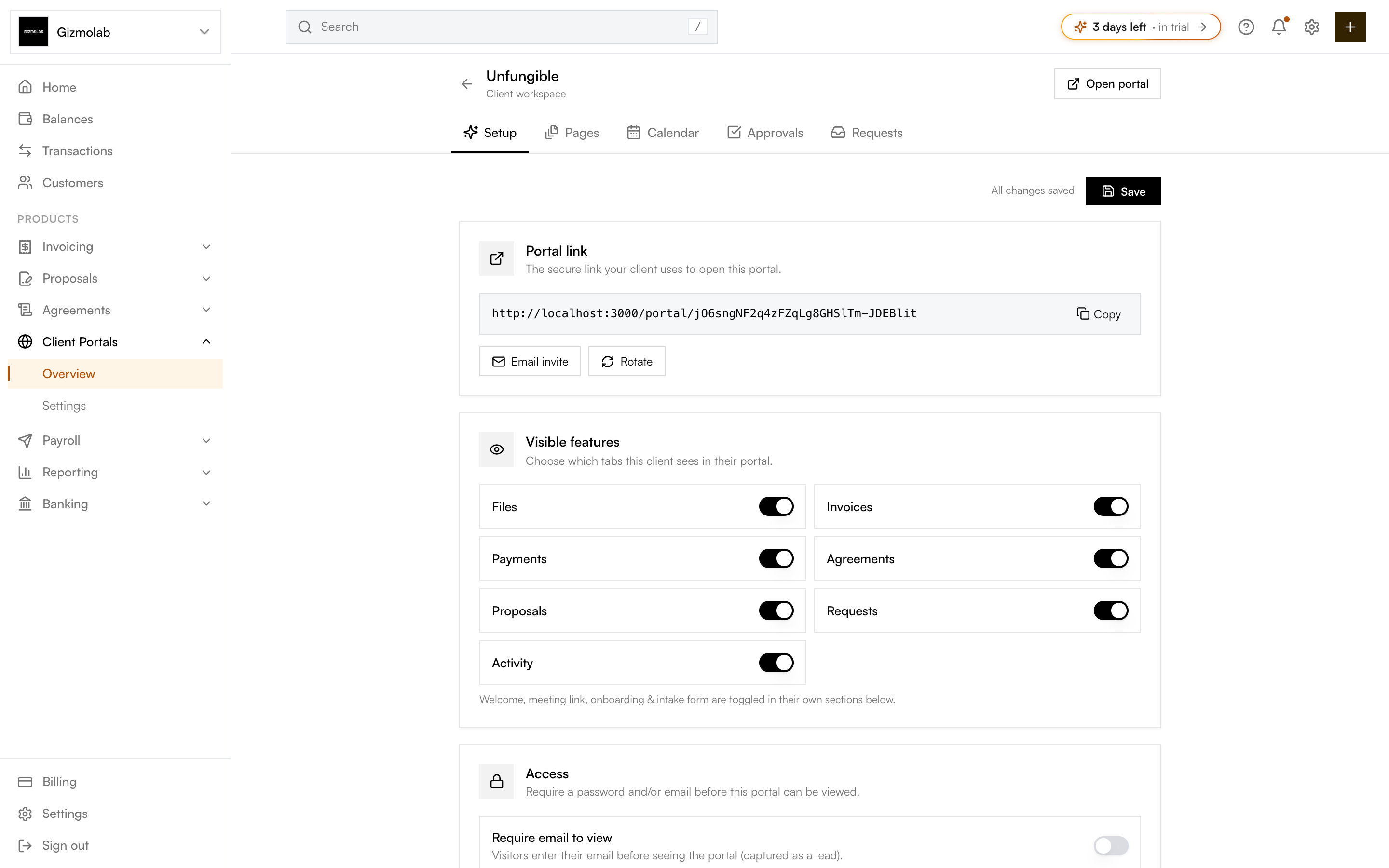
Document workflow vs. client relationship
PandaDoc treats each proposal or contract largely as its own document to be signed and, optionally, paid once. Hanko treats a client as an ongoing record: the same client, proposal, agreement, and every invoice sent to them live together in one portal, rather than each document standing alone.
Payments and billing depth
PandaDoc collects a payment on a document via integrations with Stripe, PayPal, Square, or Authorize.net — useful for a one-time signature-plus-payment moment, but it isn't built as a recurring invoicing engine with line items, taxes, and billing schedules the way Hanko's invoicing is. Hanko also doesn't route through a third-party payment gateway integration for basic card/ACH — payment methods are built into the invoice itself, including a stablecoin option PandaDoc doesn't offer.
CRM integrations
This is a genuine PandaDoc strength: it integrates with Salesforce, HubSpot, and other CRMs that larger sales organizations already run their pipeline through. Hanko doesn't currently offer CRM integrations — for a sales team whose process depends on syncing documents to an existing CRM, PandaDoc fits that requirement and Hanko doesn't.
Pricing
PandaDoc's Essentials tier is reported at $19/user/month billed annually ($35/month billed monthly), with Business at $49/user/month annual. Both are per-seat, so cost scales directly with team size. Hanko's Starter is $19/month flat, and Pro is $49/month flat for up to 5 team members — for a small team, Hanko's flat pricing is likely cheaper than PandaDoc's per-seat Business tier, though the comparison depends on which PandaDoc tier your workflow actually requires.